Ai Wei Wei

Royal Academy of Arts – 19th September 2014 – 13th December 2014

Admission: £15.50 Concessions available.

Ai Weiwei has worked in a variety of different contexts, referencing Chinese art and culture through both the choice of traditional materials and interventions with original historic objects, as well as exploring international Western contemporary art. The idea of creative freedom, especially the increasingly political aspect of much of his work, will be a prominent feature and underpin much of the exhibition. – Royal Academy of Art

Main Galleries, Burlington House

Address: Royal Academy of Arts

Burlington House

London

W1J 0BD

Tel: 020 7300 8000


Ray Tsang

Website:      raytsang.com

Email:          info@raytsang.com


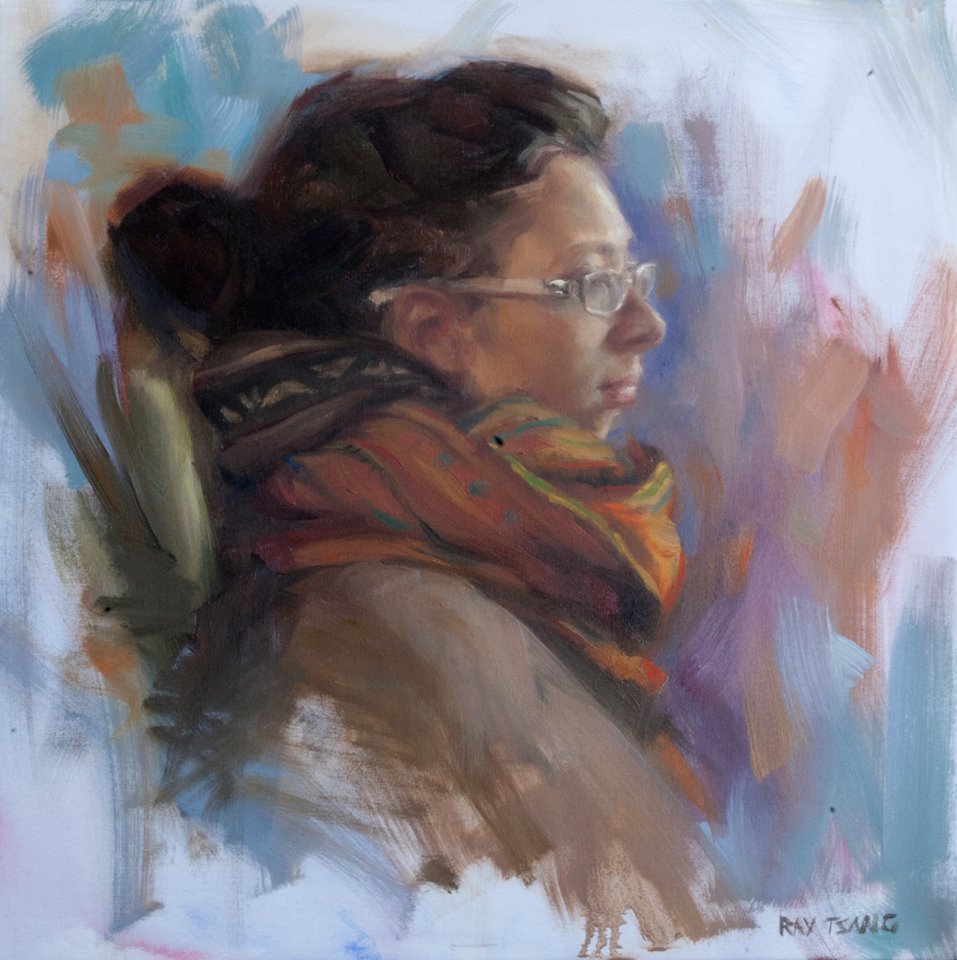
Orna

‘Orna’, Oil on canvas.

What made you want to become an Artist?

I wanted to spend my time doing something I enjoy.

What’s your background?

I studied painting at Crawford college of art and design, after college I continued to learn from books and videos. I became a professional artist in 2012.

What work do you most enjoy doing?

I prefer to do narrative work with figures.

What inspires you?

Mostly I am inspired by works painted by artists that I admire.

What is your dream project?

I would like to illustrate some book covers in the future.


View Ray Tsang’s gallery below.

This slideshow requires JavaScript.


Alexandra Gallagher


Website:       alexandragallagherart.com

Email:          alexandragallagher@sky.com


Untitled

Untitled, digital media.

What made you want to become an Artist?

I don’t think there was anything that made me want to become an artist; it’s just what I’ve always done. I have to create. I’m quite hard to live with when I don’t do something creative, it’s part of who I am. I know that sounds like a cliché, but it’s true.


What’s your background?
I started out painting portraits and felt that was my thing for a while, but I wanted to experiment more, challenge myself. I felt my work wasn’t progressing the way I wanted it to. Thats when I started in a whole new direction. I still paint portraits on request, as I love doing them, but I also love the journey I’m on with my more conceptual work. It’s exciting and I love learning new things.


What work do you most enjoy doing?
I love finding new ways of creating work. I’m always looking for something new to try, but my two joys have always been oil painting and collage. They require different disciplines and I like the contrast between them.


What inspires you?
That’s a tricky one to answer, because in a way, as an artist everything inspires me. I spend a lot of time absorbing as much art as possible. I find other artists both intimidating yet greatly inspiring. There is so much amazing work out there! I absolutely love Benjamin Cohen’s work at the moment. His early work and more recent work all appeal to me. It’s his use of the paint – his brush strokes – the movement, colour, composition.


What’s your favourite piece?
Wow! That’s a hard one to answer! Hmm… maybe “Back Street Play” because it was the start of a whole new direction in my work.


What is your dream project?
I’d love a project with a single strong, core concept, to be shown in a unique event space, and I get to experiment with different media. A bit of painting, mixed media, digital, sculpture, to fit the space the work would be exhibited in.
Pieces are available priced £36.00 – £200.00.


View Alexandra Gallagher’s Gallery:

This slideshow requires JavaScript.
Alan Kitching and Monotype: Celebrating the Centenary of Five Pioneers of the Poster

London College of Communication – 13th Sept – 16th Oct 2014

Standard Ticket: Free.

Exhibition by Alan Kitching (RDI AGI Hon FRCA) and Monotype

Tom Eckersley, Abram Games, FHK Henrion, Josef Müller-Brockmann and Paul Rand were well-known for creating iconic and memorable posters. This unique set of prints created by Alan Kitching and Monotype commemorates the 100th anniversary of the birth of these five giants of graphic design. A poster has been created in the spirit of each individual’s work and using the typefaces associated with each individual. Also exhibited alongside Alan’s work will be posters designed by Eckersley, Games, Henrion, Müller-Brockmann and Rand.

Part of LCC’s 160 exhibition #LCC160

Entry Details:
Mon – Fri: 10:00am – 5:00pm
(Saturday 11:00am until 4:00pm and Sunday closed)

Well Gallery
London College of Communication
Elephant and Castle
SE1 6SB

50 Years of Illustration

London College of Communication – 13 Sept – 31 Oct 2014

Standard Ticket: Free

Exhibition by Professor Lawrence Zeegen

50 Years of Illustration’ looks at contemporary illustration’s impact on design, while popular culture is investigated through introductory essays and profiles of leading practitioners, accompanied by examples of their greatest work.

‘50 Years of Illustration’ accompanies the launch of a new book of the same title by Professor Lawrence Zeegen, Dean of the School of Design.

Part of LCC’s 160 exhibition #LCC160

Entry Details:

Mon – Fri: 10:00am – 5:00pm

(Saturday 11:00am until 4:00pm and Sunday closed)

Upper Street Gallery
London College of Communication,
Elephant and Castle
SE1 6SB

Horst: Photographer of Style

V&A (Victoria & Albert Museum) | 6 Sept 2014 – 4 Jan 2015

Standard Ticket: £8.00

Portraits, haute couture garments, magazine spreads and film footage chart the illustrious career of the German fashion photographer.

Born in Germany in 1906, Horst P. Horst originally wanted to be an architect and moved to Paris in 1930 to study under Le Corbusier. While in the city he met Vogue photographer Baron George Hoyningen-Huene and became his assistant. Horst showed such talent that it was just a few months before he had his first picture published in the French edition of the magazine.

Beginning in the 1930s, the exhibition includes vintage photographs from the Paris Vogue archive which reveal Horst’s early work in the studio. During this period he also captured photographic portraits of many of Hollywood’s leading stars, from Rita Hayworth and Bette Davis to Vivien Leigh, Noël Coward, Ginger Rogers, and Marlene Dietrich, among others.

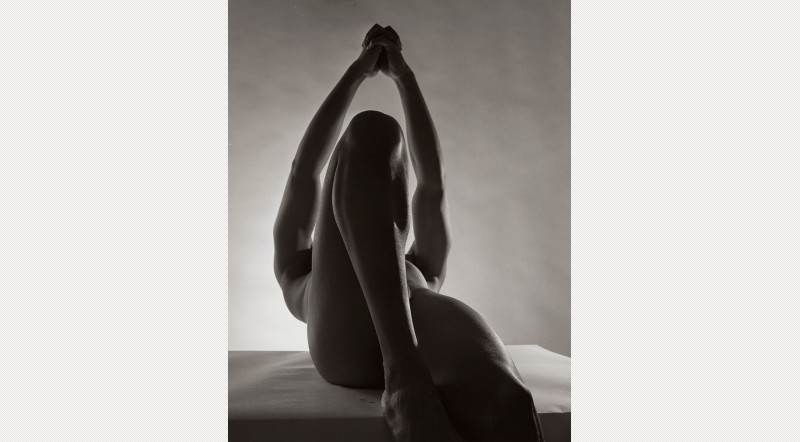
Male Nude

Male Nude – P Horst (1952)

Horst incorporated an array of influences into his work; from ancient art to Bauhaus design and Surrealism. Sometimes these references were explicit – such as collaborative projects with Salvador Dalí and Jean-Michel Frank – while other times they can be seen in the style and composition of his work. One example is a series of male nudes Horst produced for an exhibition in Paris in which the models were posed and lit to accentuate their musculature, evoking the classical sculpture that he so admired.

As well as original contact sheets, sketches and cameras, the display includes examples of the couture garments shot by Horst and film footage showing him at work in the studio.

V&A (Victoria & Albert Museum)
Cromwell Road London
SW7 2RL
Tel: 020 7942 2000
Website: www.vam.ac.uk

Entry details

Open daily, 10:00am – 5.45pm

Fri, 10:00am – 10:00pm


Royal Society of Miniature Painters, Sculptors and Gravers

Works

The work entered may be in any medium on any material provided they are in keeping with miniature techniques and all work is subject to selection by the Selection Committee.

The number of works entered may be a may be up to five miniatures for non-Members.

For Members (ARMS & RMS), up to seven miniatures may be submitted, plus, up to four larger works.

Size limits on Portraits or Subject Matter?

Objects which are the primary focus of the work must not be larger than 2″ ie. heads, animals, buildings etc (for humans, ‘heads’ is interpreted as ‘heads with normal hairstyles’ and does not include hats, head-dresses or unusual built-up hairstyles; for animals or birds, ‘heads’ includes ears and beaks.) Animal heads may also be portraits, but cannot fall under the N.F.S rule.

Submission Deadline: 5th October 2014

Submission cost: £15.00 for non-Members (incl VAT) for each work, which is non refundable.

For further information click here: http://www.royal-miniature-society.org.uk/Submission.html

Mondrian and Colour

Turner Contemporary |24th May – 21st September 2014

Standard Ticket: Free

From figuration to abstraction, the exhibition explores the evolution of the artist’s work through his use of colour.

Piet Mondrian is renown for his iconic series of geometric abstracts, yet look back to the early 1900s and the young artist was producing dreamy depictions of rural landscapes, populated with farmhouses and windmills. What unites these two distinct phases of Mondrian’s career is his innovative use of colour.

Straying from impressionist ideals that were popular in the preceding decades, Mondrian refused to see painting as simply a means of capturing external reality. Instead he wanted his works to be expressions of spirituality, prompting him to radically rethink his approach to colour. From 1921 he painted solely using the primary palette, a decision which would lead his work into abstraction.

Not only do his landscape works reveal the manifestations of Mondrian’s abstract thinking, but they also place his grid paintings in their proper context. Far from simple mathematical exercises in form, they were the development of Mondrian’s search for a new universal harmony.

Composition with Large Red Plane, Yellow, Black, Grey, Blue, 1921

Composition with Large Red Plane, Yellow, Black, Grey, Blue, 1921

A second exhibition at Tate Liverpool, Mondrian and his Studios, will chart the later years of the artist’s career, particularly his time in Paris and New York. Together the two displays form A Season of Mondrian, which spans the full breadth of his career.

Turner Contemporary, Lifeboat Station, The Rendezvous, Margate, Kent, CT9 1HG
Tel: 01843 233 000
Website: www.turnercontemporary.org

Entry details

Free entry to all
Free exhibitions to all

Tue – Sun and Bank Holidays, 10am – 6pm
Closed 25th – 26th Dec

Ming: 50 years that changed China

British Museum |18th Sept. 2014 – 5th Jan. 2015

Standard Ticket: £16.50

Exploring the pivotal years of 1400 – 1450, a transformative period in the rule of the Ming dynasty.

Although this period in the Ming dynasty has previously received little attention in Europe, it was a time of extraordinary change. Beijing became the capital city, the nation’s borders were fixed as they are today and power was centralised. On display are a series of objects that reveal the glory, wealth and creativity of this dramatic era – including gold, silver, paintings, porcelains, weapons, costume and furniture.

It was during these years that China also developed important connections with the rest of the world, boosting international trade and diplomatic relations. Hoping to replace Eurocentric versions of Ming history in the 15th century, this exhibition focuses on the intra-Asian relationships that played a key role in the formation of Chinese society and culture. Other Asian rulers were key allies – the Timurids in Iran and Central Asia, the Ashikaga in Japan and Joseon Korea, as were contacts in Bengal, Sri Lanka, Africa, and even Mecca.

Additionally, the exhibition explores diversity within the Ming Empire itself, and champions the idea that it was multiple courts – as opposed to one single, monolithic, imperial court – that are important in understanding this period.

Cloisonne Enamel Ja

Cloisonne Enamel Jar, 1426 – 1435

Representing the four emperors that ruled China between 1400 – 1450, the display includes the sword of the Yongle Emperor (‘the Warrior’), the handwriting of the Hongxi emperor (‘the bureaucrat’), the paintings of the Xuande emperor (‘the aesthete’) and the portraits of the regents who ruled while the Zhengtong emperor was a boy. There are also examples of costumes, gold, jewellery and furniture that once belonged to the princes.

Another highlight of the exhibition is material which explores the building of the Forbidden City, which is still the national emblem on coins and military uniforms today.

British Museum, Great Russell Street, London, WC1B 3DG
Tel: 020 7323 8299
Website: www.britishmuseum.org

Entry details

Sat – Thu, 10am – 5.30pm
Fri, 10am – 8.30pm
Closed 24 th – 26th Dec and 1st Jan 2015

Book online via the British Museum website


Designing the 20th Century: Life and Work of Abram Games

Jewish Museum |8 Sept. 2014 – 4th Jan. 2015

Standard Ticket: £7.50

Curated in conjunction with Games’ children, who have allowed the museum unprecedented access to the family archives.

Abram Games was born in Whitechapel, London to Jewish immigrants the day after the First World War began in 1914. He studied at Saint Martin’s School of Art but left after just two terms and began working as a studio assistant at a design firm, while also taking night classes in life drawing.

After getting fired from his job for jumping over a group of chairs as a prank, he began working as a freelance poster artist, producing bold and colourful graphic designs for London Transport and other clients. This exhibition includes a selection of his most celebrated pieces, drawn from across his career.

During the Second World War, Games was chosen as an official poster artist and worked on campaigns for Auxiliary Territorial Service recruitment and wartime safety. Combining stark images with clear typography, his designs became instantly iconic and are still among the most recognisable today.

In the post-war years, Games’ career went from strength to strength and he was commissioned to create posters for the Financial Times, Guinness, the Olympic Games and the United Nations, among others. Praised by the Guide to the World’s Greatest Illustrators for his use of ‘striking colour, bold graphic ideas, and beautifully integrated typography’, he is widely considered to be one of the best graphic designers of the 20th-century.

Interestingly, the display also reveals that Games designed a series of objects, including a coffee maker and a copying machine.

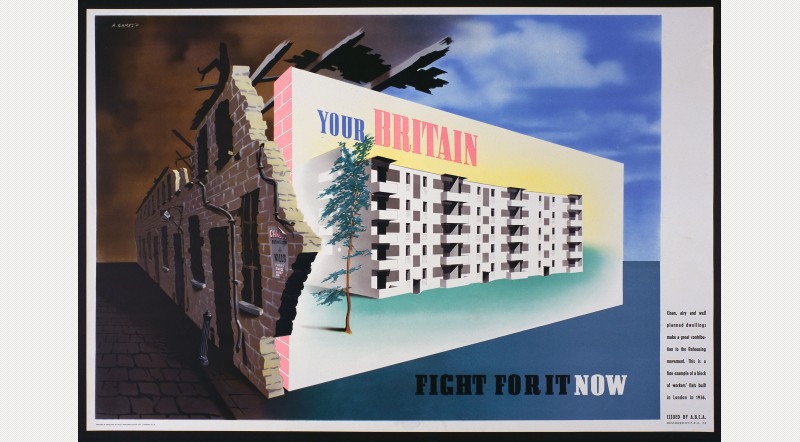
Your Britain, 1942

Your Britain, 1942

Discussing his cultural heritage, Games once said ‘I feel intensely Jewish. It has contributed to the character of my work’. Exhibits on display reveal the huge amount of work he did for Jewish organisations and Jewish causes, mostly for free.

Jewish Museum, 129-131 Albert Street, Camden Town, London, NW1 7NB
Tel: 020 7284 7384
Website: www.jewishmuseum.org.uk

Entry details

Sun – Thu, 10am – 5pm
Fri, 10am – 2pm

Closed on Jewish Festivals (see website for details)