Egon Schiele: The Radical Nude

Courtauld Gallery | 23 Oct 2014 – 18 Jan 2015

Admission: standard entry £6.00

Egon Schiele was no stranger to controversy. His nudes – raw, fleshy and unflinching – were criticised for being disturbing and grotesque; too erotic, too explicit, too radical. In fact, so ‘offensive’ were these works, they earned Schiele a two month prison sentence, and at the trial the judge is alleged to have burned some of the drawings with a candle flame.

This is the first UK show dedicated solely to the artist, and it is long overdue. Bringing together some of his most extraordinary watercolours and drawings, it reveals the profound influence he had on modern depictions of the human figure. But it also portrays an audacious artist who was unapologetic for the vision of his art. His work alludes to a future that includes Francis Bacon, Tracey Emin and Marlene Dumas.

Arriving in Vienna in 1906 aged just 15, Schiele sought out Gustav Klimt and implored him to become his mentor. After an unremarkable start, his breakthrough came in 1910. The nudes he produced in this seminal year were complex, expressive and emotionally-charged; totally unlike anything that had been seen before. The display begins at this incredible moment in Schiele’s career and continues up to his untimely death at 28 years old. – Art Fund

Seated Female Nude with  Raised Arm

Seated Female Nude with Raised Arm – Gertrude Schiele – 1910.

‘The Austrian artist’s passionate love of women is illuminated in one of the most important – and sexy – exhibitions of the year’ – Jonathan Jones, The Guardian

‘Schiele’s drawings may not be beautiful but they are mesmerising to behold’ – Alastair Sooke, The Telegraph

Courtauld Gallery

Somerset House

Strand

London

WC2R 0RN

Tel: 020 7848 2526

www.courtauld.ac.uk

Opening Times:

Daily, 10am – 6pm


Malevich

Malevich

Tate Modern | 16th July – 26th October 2014

Admission: £14.50/ £12:50 concessions

Each painting unleashes itself like a firework.
– The Observer

Kazimir Malevich, an artist as influential as he was radical, cast a long shadow over the history of modern art. This, his first retrospective in thirty years and the first ever in the UK, unites works from collections in Russia, the US and Europe to tell a fascinating story of revolutionary ideals and the power of art itself.

Malevich (1879–1935) lived and worked through one of the most turbulent periods in twentieth century history. Having come of age in Tsarist Russia, Malevich witnessed the First World War and the October Revolution first-hand.

His early experiments as a painter led him towards the invention of suprematism, a bold visual language of abstract geometric shapes and stark colours, epitomised by the Black Square. One of the defining works of Modernism, the painting was revealed to the world after months of secrecy and was hidden again for almost half a century after its creator’s death. It sits on a par with Duchamp’s ‘readymade’ as a game-changing moment in twentieth century art and continues to inspire and confound viewers to this day.

Starting from his early paintings of Russian landscapes, agricultural workers and religious scenes, the exhibition follows Malevich’s journey towards abstract painting and his suprematist masterpieces, his temporary abandonment of painting in favour of teaching and writing, and his much-debated return to figurative painting in later life.

Bringing together paintings, sculptures, theatre and an unprecedented collection of drawings it offers a complete view of his career, celebrating some of the most progressive art ever made.

– The Tate Modern

Malevich

Malevich – Supremus No.50

Entry Details: Sunday – Thursday: 10:00am – 6:00pm (last admission to special exhibitions is at 5.15pm)
Friday – Saturday: 10:00am – 10:00pm (last admission to special exhibitions is at 9.15pm)

The Eyal Ofer Galleries, Level 3

Address: Tate Modern

Bankside

London

SE1 9TG

Tel: 020 7887 8888

Tracey Emin: The Last Great Adventure Is You

Tracey Emin: The Last Great Adventure is You

White Cube Bermondsey| 8th October 2014 – 16th November 2014

Admission: Free

‘The work is about rites of passage, of time and age, and the simple realisation that we are always alone.’
Tracey Emin, July 2014

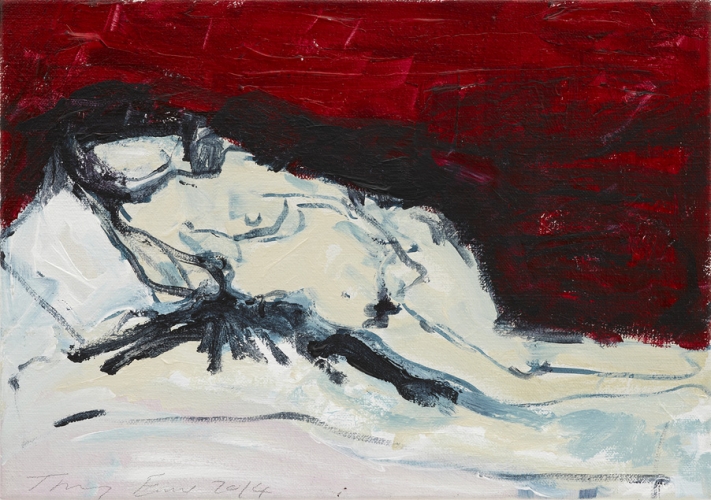
White Cube is pleased to announce ‘The Last Great Adventure is You’, a major new exhibition by Tracey Emin, her first at the London gallery in five years. Featuring bronze sculptures, gouaches, paintings, large-scale embroideries and neon works, the exhibition chronicles the contemplative nature of work by an artist who has consistently examined her life with excoriating candour.

Reflective in tone, the works in the exhibition are the result of many years’ development, from the bronze sculptures – the most significant body she has made to date – to the works on canvas. There is a complexity in the sculptural form of the bronzes, simultaneously robust yet tender, that points to a consummate understanding of material, composition and subject matter. In Grotto (2014), a tessellated, cave-like chamber gives sanctuary to a solitary figure as artist proxy, while the muscular form of Bird (2014) harmonises sinuous lines with gravity and grace. A series of bronze bas relief plaques portray figures that appear amorphous yet distinct, with subtle interplay between light and shadow.

While the paintings at first appear simple and immediate, many of them are the result of application, obliteration and layering over a period of several years. Emin repeatedly returns to the canvases as a means of reviewing, revising and reconsidering her own position in relation to painting through temporal passages.

The title ‘The Last Great Adventure is You’, which is transcribed in neon within the exhibition, was originally intended by Emin as a reference to the ‘other person’; however, over the two year period since she began creating this body of work, she came to realise that the implication was once again coming back to the self. – White Cube

Untitled

Untitled

Entry Details:

Tuesday – Saturday: 10:00am – 6:00pm
Sunday: 12:00pm – 6:00pm

South Galleries and 9 x 9 x 9, Bermondsey

Address: White Cube Bermondsey

144 – 152 Bermondsey Street

London

SE1 3TQ

Tel: 0207 930 5373


Dennis Hopper – The Lost Album

Royal Academy of Arts – 26th June 2014 – 19th October 2014

Admission: £11.50. Concessions available.

Dennis Hopper carved out a place in Hollywood history, with roles in classic films like Apocalypse Now, Blue Velvet, True Romance and Easy Rider. He is less well known, though no less respected, for his work as a photographer. This exhibition brings together over 400 images, taken during one of the most creative periods of his life in the 1960s. Every image you’ll see was chosen by Hopper himself for his first major exhibition in 1970 and is the vintage print he produced for that occasion.

This was a decade of huge social and political change, and Hopper was at the eye of the storm. With his camera trained on the world around him he captured Hell’s Angels and hippies, the street life of Harlem, the Civil Rights movement and the urban landscapes of East and West coast America. He also shot some of the biggest stars of the time from the worlds of art, fashion and music, from Andy Warhol to Paul Newman.

Together, these images are a fascinating personal diary of one of the great countercultural figures of the period and a vivid portrait of 1960s America.

– Royal Academy of Arts.

Entry Details:

Saturday – Thursday: 10:00am – 6:00pm
Friday 10:00am – 10:00pm

Address: Royal Academy of Arts

6 Burlington Gardens

London

W1S 3ET

Alan Kitching and Monotype: Celebrating the Centenary of Five Pioneers of the Poster

London College of Communication – 13th Sept – 16th Oct 2014

Standard Ticket: Free.

Exhibition by Alan Kitching (RDI AGI Hon FRCA) and Monotype

Tom Eckersley, Abram Games, FHK Henrion, Josef Müller-Brockmann and Paul Rand were well-known for creating iconic and memorable posters. This unique set of prints created by Alan Kitching and Monotype commemorates the 100th anniversary of the birth of these five giants of graphic design. A poster has been created in the spirit of each individual’s work and using the typefaces associated with each individual. Also exhibited alongside Alan’s work will be posters designed by Eckersley, Games, Henrion, Müller-Brockmann and Rand.

Part of LCC’s 160 exhibition #LCC160

Entry Details:
Mon – Fri: 10:00am – 5:00pm
(Saturday 11:00am until 4:00pm and Sunday closed)

Well Gallery
London College of Communication
Elephant and Castle
SE1 6SB

50 Years of Illustration

London College of Communication – 13 Sept – 31 Oct 2014

Standard Ticket: Free

Exhibition by Professor Lawrence Zeegen

50 Years of Illustration’ looks at contemporary illustration’s impact on design, while popular culture is investigated through introductory essays and profiles of leading practitioners, accompanied by examples of their greatest work.

‘50 Years of Illustration’ accompanies the launch of a new book of the same title by Professor Lawrence Zeegen, Dean of the School of Design.

Part of LCC’s 160 exhibition #LCC160

Entry Details:

Mon – Fri: 10:00am – 5:00pm

(Saturday 11:00am until 4:00pm and Sunday closed)

Upper Street Gallery
London College of Communication,
Elephant and Castle
SE1 6SB

Mondrian and Colour

Turner Contemporary |24th May – 21st September 2014

Standard Ticket: Free

From figuration to abstraction, the exhibition explores the evolution of the artist’s work through his use of colour.

Piet Mondrian is renown for his iconic series of geometric abstracts, yet look back to the early 1900s and the young artist was producing dreamy depictions of rural landscapes, populated with farmhouses and windmills. What unites these two distinct phases of Mondrian’s career is his innovative use of colour.

Straying from impressionist ideals that were popular in the preceding decades, Mondrian refused to see painting as simply a means of capturing external reality. Instead he wanted his works to be expressions of spirituality, prompting him to radically rethink his approach to colour. From 1921 he painted solely using the primary palette, a decision which would lead his work into abstraction.

Not only do his landscape works reveal the manifestations of Mondrian’s abstract thinking, but they also place his grid paintings in their proper context. Far from simple mathematical exercises in form, they were the development of Mondrian’s search for a new universal harmony.

Composition with Large Red Plane, Yellow, Black, Grey, Blue, 1921

Composition with Large Red Plane, Yellow, Black, Grey, Blue, 1921

A second exhibition at Tate Liverpool, Mondrian and his Studios, will chart the later years of the artist’s career, particularly his time in Paris and New York. Together the two displays form A Season of Mondrian, which spans the full breadth of his career.

Turner Contemporary, Lifeboat Station, The Rendezvous, Margate, Kent, CT9 1HG
Tel: 01843 233 000
Website: www.turnercontemporary.org

Entry details

Free entry to all
Free exhibitions to all

Tue – Sun and Bank Holidays, 10am – 6pm
Closed 25th – 26th Dec

Ming: 50 years that changed China

British Museum |18th Sept. 2014 – 5th Jan. 2015

Standard Ticket: £16.50

Exploring the pivotal years of 1400 – 1450, a transformative period in the rule of the Ming dynasty.

Although this period in the Ming dynasty has previously received little attention in Europe, it was a time of extraordinary change. Beijing became the capital city, the nation’s borders were fixed as they are today and power was centralised. On display are a series of objects that reveal the glory, wealth and creativity of this dramatic era – including gold, silver, paintings, porcelains, weapons, costume and furniture.

It was during these years that China also developed important connections with the rest of the world, boosting international trade and diplomatic relations. Hoping to replace Eurocentric versions of Ming history in the 15th century, this exhibition focuses on the intra-Asian relationships that played a key role in the formation of Chinese society and culture. Other Asian rulers were key allies – the Timurids in Iran and Central Asia, the Ashikaga in Japan and Joseon Korea, as were contacts in Bengal, Sri Lanka, Africa, and even Mecca.

Additionally, the exhibition explores diversity within the Ming Empire itself, and champions the idea that it was multiple courts – as opposed to one single, monolithic, imperial court – that are important in understanding this period.

Cloisonne Enamel Ja

Cloisonne Enamel Jar, 1426 – 1435

Representing the four emperors that ruled China between 1400 – 1450, the display includes the sword of the Yongle Emperor (‘the Warrior’), the handwriting of the Hongxi emperor (‘the bureaucrat’), the paintings of the Xuande emperor (‘the aesthete’) and the portraits of the regents who ruled while the Zhengtong emperor was a boy. There are also examples of costumes, gold, jewellery and furniture that once belonged to the princes.

Another highlight of the exhibition is material which explores the building of the Forbidden City, which is still the national emblem on coins and military uniforms today.

British Museum, Great Russell Street, London, WC1B 3DG
Tel: 020 7323 8299
Website: www.britishmuseum.org

Entry details

Sat – Thu, 10am – 5.30pm
Fri, 10am – 8.30pm
Closed 24 th – 26th Dec and 1st Jan 2015

Book online via the British Museum website


Designing the 20th Century: Life and Work of Abram Games

Jewish Museum |8 Sept. 2014 – 4th Jan. 2015

Standard Ticket: £7.50

Curated in conjunction with Games’ children, who have allowed the museum unprecedented access to the family archives.

Abram Games was born in Whitechapel, London to Jewish immigrants the day after the First World War began in 1914. He studied at Saint Martin’s School of Art but left after just two terms and began working as a studio assistant at a design firm, while also taking night classes in life drawing.

After getting fired from his job for jumping over a group of chairs as a prank, he began working as a freelance poster artist, producing bold and colourful graphic designs for London Transport and other clients. This exhibition includes a selection of his most celebrated pieces, drawn from across his career.

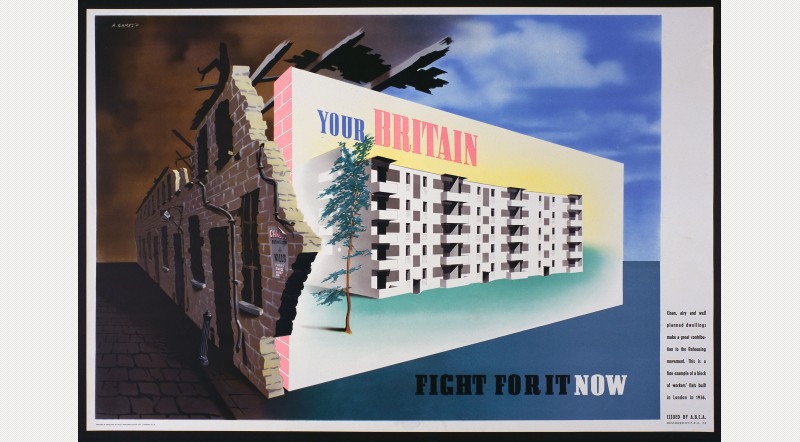
During the Second World War, Games was chosen as an official poster artist and worked on campaigns for Auxiliary Territorial Service recruitment and wartime safety. Combining stark images with clear typography, his designs became instantly iconic and are still among the most recognisable today.

In the post-war years, Games’ career went from strength to strength and he was commissioned to create posters for the Financial Times, Guinness, the Olympic Games and the United Nations, among others. Praised by the Guide to the World’s Greatest Illustrators for his use of ‘striking colour, bold graphic ideas, and beautifully integrated typography’, he is widely considered to be one of the best graphic designers of the 20th-century.

Interestingly, the display also reveals that Games designed a series of objects, including a coffee maker and a copying machine.

Your Britain, 1942

Your Britain, 1942

Discussing his cultural heritage, Games once said ‘I feel intensely Jewish. It has contributed to the character of my work’. Exhibits on display reveal the huge amount of work he did for Jewish organisations and Jewish causes, mostly for free.

Jewish Museum, 129-131 Albert Street, Camden Town, London, NW1 7NB
Tel: 020 7284 7384
Website: www.jewishmuseum.org.uk

Entry details

Sun – Thu, 10am – 5pm
Fri, 10am – 2pm

Closed on Jewish Festivals (see website for details)

Knitwear: Chanel to Westwood

The Fashion and Textile Museum |19th Sept 2014 – 18th Jan 2015

Standard Ticket: £8.00

Charting over 100 years of knitwear history, beginning with the functional garments of the early 20th century and spanning up to the experimental designs Julien MacDonald created for Givenchy and Chanel in the 1990s.

The 150 items of knitwear have been drawn from the collection of Mark and Cleo Butterfield, which is on show to the public for the first time. Displayed chronologically, early exhibits include knitted sportswear popularised during the First World War and easy-wearing Chanel twinsets from the 1920s.

Moving onto the clothing restrictions and rations of the Second World War, the display explores how women became creative with old knitwear. Sweaters were unravelled and the yarn recycled to make new multi-colour jumpers which made a feature of the variety of wools used.

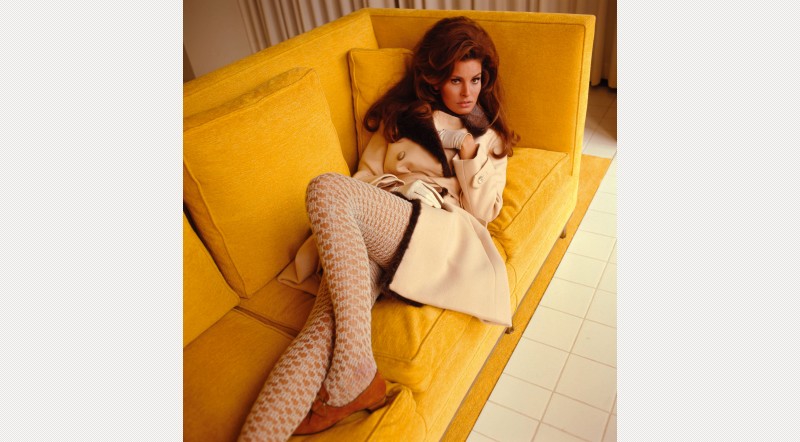
The transformation from functional to fashionable was complete by the 1950s, influenced in large part by its popularity with Hollywood stars and leading avant garde designers. Examples of the ‘cocktail sweater’ feature a defined waist and embellishments at the neck and shoulders, while the crocheted mini-dress epitomises youth quake style in the 60s. There are also items of brightly coloured ‘novelty knit’ with kitsch motifs; a hallmark of 1970s fashion.

Raquel Welch - 1967

Raquel Welch – 1967

Concurrent displays in the mezzanine and ground floor galleries include Visionary Knitwear – bold designs from the 21st century selected by Sandy Black from the London College of Fashion – and Knitwear in Fashion Photography, featuring pictures from magazines such as Harper’s Bazaar, Vogue and Queen.

The Fashion and Textile, Museum83, Bermondsey Street, London, SE1 3XF,
Tel: 020 7407 8664
Website: www.ftmlondon.org

Entry details

Tue – Sat, 11am – 6pm (Sun until 5pm) during exhibitions