Jackson Pollock: Blind Spots

Tate Liverpool |30 June – 18 October 2015

Jackson Pollock is widely considered to be one of the most influential and provocative American artists of the twentieth century. Pollock famously pioneered action painting, a process that saw him drip paint on canvases resting on the studio floor.

Portrait and a Dream (1953)


Portrait and a Dream (1953)

Jackson Pollock’s Black Pourings, created between 1951 and 53 – remains one of Pollock’s lesser-known, yet marks an important period in the artist’s practice.  After four years of creating vivid, colourful compositions, the Black Pourings were a radical departure from his signature style.

Pollock had signed to a commercial gallery, and was struggling to deal with the mounting pressure of expectation. He made a deliberate decision to move away from the defining ‘drip’ technique that had brought him critical acclaim, instead experimenting with a new ‘pour’ in treacly black paint. The resulting canvases are distinctively macabre in feel.

As well as presenting this poignant series of work, Tate Liverpool is showing a selection of Pollock’s drawings and rarely-seen sculptures from the same period – just a few years before his tragic death.

Address: Tate Liverpool, Albert Dock, Liverpool, Merseyside, L3 4BB

Tel: 0151 702 7400

Website: www.tate.org.uk/Liverpool

Opening Hours:

Open daily between 10.00–17.00
Closed 3 April and 24 – 26 December 2015 

Admission:

Adult £11 (without donation £10)

Concession £8.25 (without donation £7.50).

Under 12s go free (up to four under 12s per parent or guardian).

Family tickets available (two adults and two children 12-18 years) by telephone or in the gallery only.
Marc Guinan

Email: marcguinan@gmail.com


D5

Who are you and what type of work do you do?

I am an artist from Dublin, Ireland. I am a visual artist interested in expanded painting and materiality and questioning traditional ideas around display within the gallery space.

What’s your background?

I loved art as a child but due to personal circumstances I did not find on my path in life till I was
35. I served my time as a teenager working in bakeries. I also have a 14-year construction background. I lost my job in 2009 due to the recession and was introduced to art whilst participating in an adult education program. This started my journey and with lots of encouragement from friends and family I have pursued this avenue and my practice has now become my life and passion. My exposure within my Fine Arts degree has enhanced this further and indeed my appetite for art making.

What art do you most identify with?

Abstraction and Minimalism and I love the artist’s Barnett Newman and Donald Judd.

What work do you most enjoy doing?

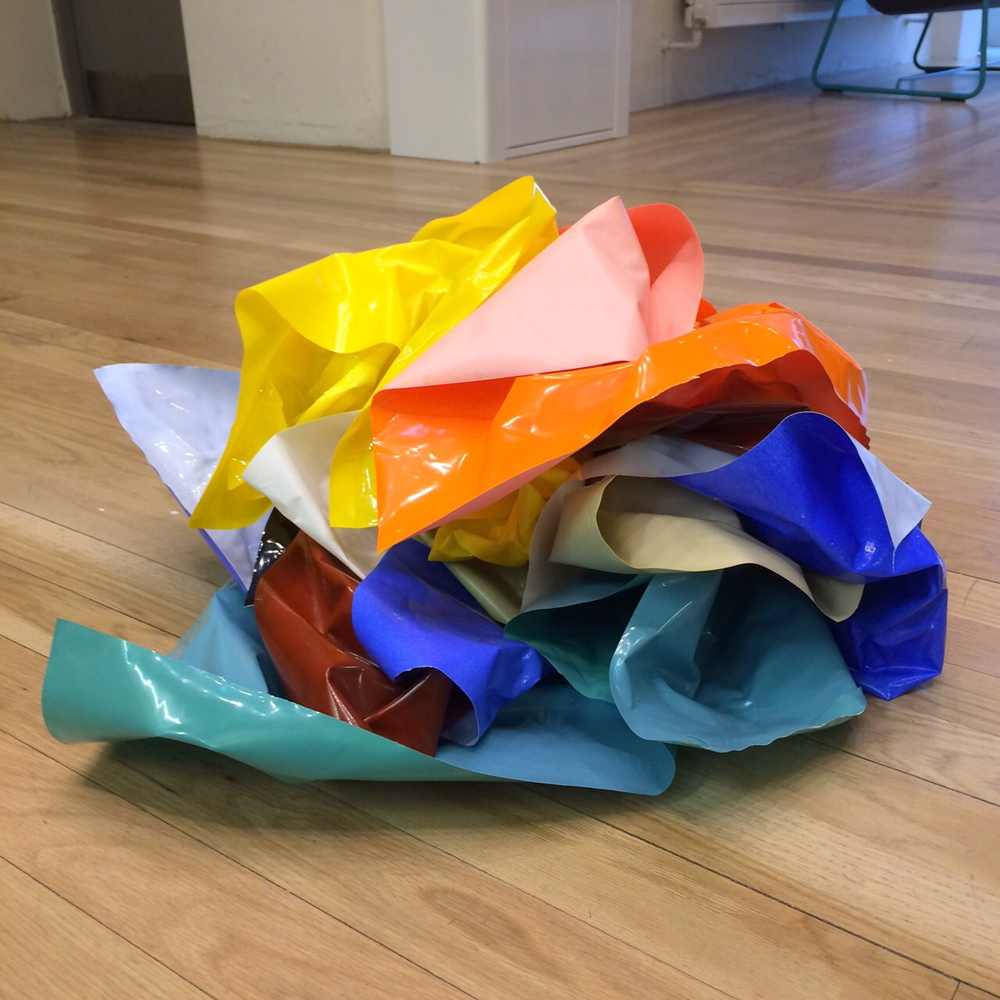
My passion is abstraction and minimalism. I’m currently interested in materiality and process based work. I like to present a set of circumstances and allow an element of unpredictability to influence the final outcomes within my practice. Current themes and motifs that run through my practice can be summarized as follows: tradition through acknowledgment, colour investigation, suggestion, mystery, silence, events captured within materiality, patience, layering, unpredictability, interaction, calmness, repetition, de-stress, folding, envelop, satire, confidence, draping and collapse.

Which of your artwork pieces says the most about you?

My painted forms of 2015 give a good idea of where I am at within my practice.

What is your dream project?

I would like to create much larger pieces and expose my work to larger audiences. My painted forms are beautifully still and autonomous and need to be experienced rather than viewed.


This slideshow requires JavaScript.

Frank O’Dea

Email: odea.frank@gmail.com

Balla Bán Art Gallery


Balla Ban Art Gallery is based Dublin City where a selection of Frank’s artworks can be seen. His art is also on permanent display at Il Fico Italian Restaurant, Chatham Street. Dublin 2.

The View and the Vino

The View and the Vino, oil on canvas

Who are you and what type of work do you do?

I’m a painter and art gallery owner – my gallery, Balla Bán Art Gallery (which is the Irish for “white wall”) is a small boutique art gallery based in Dublin city centre and apart from my own artworks, I sell art from both emerging and well established contemporary Irish artists.

What’s your background?

I have been painting for the past 15 years and while I did not attend formal art college I have been regularly going to evening art classes as well as self taught. My art gallery is now five years old and it is building up a loyal base of art collectors and followers both from the domestic and over seas market.

What art do you most identify with?

The art I most identify with is by artists such as Scottish/Italian artist Jack Vettriano, Belfast artist, Roy Wallace, Graham Knuttel, and stylised figurative paintings that convey a story and/or humour encounters.

What work do you most enjoy doing?

Lately I have enjoyed painting lunar landscapes as well as Mars using palette knife and thicker paint to create the surface.

Which of your art work pieces says the most about you?

Perhaps my colour oil paintings of cafe/bar social scenes or musicians would be the answer to this question. I do love people watching and the interactions that go on in this environment. As a musician myself (piano/guitar) I also love to paint musicians having played in piano restaurants around Dublin for many years.

Which of your art work pieces says the most about you?

My dream project seems to be constantly [changing] as I get new inspirations and ideas but I would like to put on an exhibition that features my upcycled artworks – old/broken/disused mannequins that I have painted in abstract designs along with old/broken musical instruments and to showcase at a music or entertainment venue. I call the upcycled mannequin art my “Shady Ladies” and “Shady Men” and I think they are very eye catching and humourous.

This slideshow requires JavaScript.

Love is Enough: William Morris and Andy Warhol

Birmingham Museum and Art Gallery | 25 April – 6 September 2015

Admission: Standard entry £7

Jeremy Deller celebrates two groundbreaking artists, drawing parallels between their inspiration, politics and aesthetics.

Andy Warhol, Dame Elizabeth Taylor, 1967 © 2014 The Andy Warhol Foundation for the Visual Arts, Inc. / Artists Rights Society (ARS), New York and DACS, London.

Andy Warhol, Dame Elizabeth Taylor, 1967
© 2014 The Andy Warhol Foundation for the Visual Arts, Inc. / Artists Rights Society (ARS), New York and DACS, London.

It may seem an unlikely pairing, but Morris and Warhol have rather a lot in common, according to Jeremy Deller. In this unorthodox show the artist presents a new reading into the work of two of his greatest inspirations, displaying prints, tapestries, publications and sketches from throughout their respective careers.

Hugely influential in their own lifetime, both Morris and Warhol began their creative ventures in commercial sectors, before redefining the role of the artist in relation to wider society. Morris was a passionate advocate for social change, strongly believing that the labour and beauty of art could revolutionise the social structure in Britain. He used his textile company to produce stunning designs that embodied the ethos of the Arts and Crafts movement, harking back to form of mediaeval romanticism.

Warhol’s own political agenda is often overlooked in the general perception of his work, and is well known for his obssession with the idea of the icon, especially in terms of Hollywood stardom. His incredible influence over the merging of fame, media and high art can still be felt today, but his concept of ‘Commonism’ – in which the banal and everyday is celebrated and art is available and equal to all – is sometimes not fully contemplated.

This exhibition encompasses four areas that show the artists’ shared inspiration, methodologies and aesthetics: ‘Camelot’, ‘Hopes and Fears in Art’, ‘A Factory it Might Be’ and ‘Flower Power’. Infamous Warhol prints such as Flowers are mounted onto classic Morris wallpaper, allowing for new and exciting readings into the works that have never been seen before.  – Art Fund

Birmingham Museum and Art Gallery
Chamberlain Square
Birmingham West
Midlands
B3 3DH
0121 303 1966
www.bmag.org.uk
Opening Times:

Mon – Thu, 10am – 5pm
Fri, 10.30am – 5pm
Sat – Sun, 10am – 5pm

Women Fashion Power

Design Museum |29 Oct 2014 – 26 Apr 2015

Admission: Standard entry £13

From Naomi Campbell to Pearl Lam, Viviene Westwood to the mayor of Paris, exploring how influential women have used fashion to build reputation and assert authority.


Dame Vivienne Westwood, designer Photograph © Christian Shambenait

Dame Vivienne Westwood, designer
Photograph © Christian Shambenait

Peering into the wardrobes of the world’s power-dressing women, this exhibition –​ devised by award-winning architect Zaha Hadid – explores fashion as a marker of status. Thankfully it isn’t all shoulder pads and tailored suits; the diverse choice of subjects showcase wide-ranging sartorial style. Zandra Rhodes’ outlandish outfits are counterbalanced by the demure designs favoured by Margaret Thatcher. Meanwhile, extravagantly stylish pieces worn by the likes of Naomi Campbell prove that being ambitious no longer means a dress code that’s androgynous.

Although the show encompasses 150 years of women’s fashion history, it’s the contemporary examples that are likely to draw the most interest. Twenty of today’s leading female figures were asked to contribute one of their own outfits for display, and in accompanying interviews they elaborate on their personal style philosophy. Ranging from politicians to princesses, the 20 participants include Liberty director Shami Chakrabarti, Serpetine Galleries’ Julia Peyton-Jones, Newsnight presenter Kirsty Wark, the lead vocalist of Skunk Anansie and HSH Charlène of Monaco. – Art Fund

Design Museum
Shad Thames
London
SE1 2YD
020 7940 8783
www.designmuseum.org

Opening Times:

Daily, 10am – 5.45pm (last admission 5.15pm)

Book online via the Design Museum website

Marlene Dumas: The Image as Burden

Tate Modern | 5 February – 10 May 2015

Admission: Standard entry £14.50

The artist’s depictions of the human figure reflect upon love, death, gender, sexuality and the influence of mass media and celebrity.

For Marlene Dumas portraiture is not part of a wider oeuvre, portraiture is a single obsession. Even as a child she sought only to represent the face or figure. ‘I never did a tree,’ she told the New York Times in 2008.

Marlene Dumas, The Widow, 2013

Marlene Dumas, The Widow, 2013

And yet she is not like other portrait artists. Rarely working from life, she finds her subjects in newspapers and magazines or recreates her daughter from old photographs. She admits to knowing little about colour, instead using it intuitively. Her work – intense and at times unsettling – captures a mood as much as a physical presence. For example, the series of weeping women she produced in the year after her mother died, her heartbreak spilling out across the canvas.

From her earliest sketches to newly finished portraits, Tate Modern presents the most significant retrospective of Dumas’s career to be staged in Europe. It takes its name from her 1993 work depicting one figure carrying another. The artist sees a connection between the subject of the painting, and the painter who carries the weight of her subject.

Terrorists, movie stars, deformed babies and strippers are captured in inky swirls of paint. Never entirely literal, for Dumas these portraits are a means by which to delve into the murky depths of the human experience. Race, sexuality, oppression, torture and death sit firmly within her scope of exploration. As Dumas told W Magazine before her retrospective in Los Angeles, ‘I am interested in what a human being is capable of.’ – The Art Fund

Tate Modern
Bankside
London
SE1 9TG
020 7887 8888
www.tate.org.uk
Opening Times: 

Sun – Thu, 10am – 6pm (last admission to special exhibitions is at 5.15pm)
Fri – Sat, 10am – 10pm (last admission to special exhibitions is at 9.15pm)

Goya: The Witches & Old Women Album

The Courtauld Gallery | 26 February – 25 May 2015

Admission: standard entry £7.50

Revealing Goya’s obsession with visions, nightmares, superstitions and mortality.

Ravaged by a debilitating near-fatal illness and all-but completely deaf, Francisco Goya was a changed artist in middle age. While he continued as a court painter to the Spanish crown, privately he worked on a series of albums where he recorded his increasingly dark thoughts.

Francisco Goya, He can no longer at the age of 98, c. 1819-23

Francisco Goya, He can no longer at the age of 98, c. 1819-23

The drawings they contained – populated with nightmarish figures, superstitious tales and horrific deaths – were never intended to be seen beyond a small circle of friends. They are brutally indicative of his mental state; at the same time he had isolated himself in a remote house outside of Madrid where he covered the walls with his ‘Black Paintings’.

After his death in 1828 the eight albums were broken up and scattered across museums and private collections. This is the first exhibition to bring together all the drawings from the Witches and Old Women album – previously misunderstood as individual drawings rather than a single project. The final surviving page is particularly poignant: an elderly figure leaning on two sticks entitled ‘Can’t go on any longer…’. – Art Fund

The Courtauld Gallery
Somerset House
Strand
London
WC2R 0RN
020 7848 2526
www.courtauld.ac.uk
Opening Times:

Daily, 10am – 6pm


History is Now: 7 Artists Take on Britain

Hayward Gallery |10 February – 26 April 2015

Admission: Standard entry £10.90

Seven artists reflect on British cultural life from 1945 to the present day.

As the Second World War neared its conclusion, Britain approached a watershed moment. The post-war world would be a very different place, and Britain’s economy, still labouring under outdated Victorian notions of industry, would struggle to compete in the new global market.

One month after V-E Day, the recently founded Council of Industrial Design announced an exhibition to reflect on Britain’s past industrial successes and create a blueprint for its future. Titled ‘Britain Can Make It’, the exhibition was distinguished by a 13-foot plaster egg at its entrance – a reference to one of the exhibition’s central exhibits, Misha Black’s ‘Birth of an Egg Cup’, but also symbolic of the planned rebirth of British industry for a brave new era. Seven decades later, the UK finds itself on the brink of another turning point, with new questions and new uncertainties.

Simon Fujiwara

Simon Fujiwara

Today’s Britain isn’t post-war, but post-recession, post-riot, post-referendum. In the lead up to the 2015 general election, the Hayward Gallery has taken inspiration from the Council of Industrial Design’s exhibition for a new show reflecting on key moments in British culture since the end of the Second World War.

Seven artists – Richard Wentworth, John Akomfrah, Jane and Louise Wilson, Hannah Starkey, Roger Hiorns and Simon Fujiwara – have each been invited to curate a ‘chapter’ of the exhibition, selecting artworks and objects that capture pivotal events from the last 70 years, from the emergence of the surveillance state to the mad cow disease epidemic. – Art Fund

Hayward Gallery
Southbank Centre
Belvedere Road
London
SE1 8XX
020 7960 4200
www.southbankcentre.co.uk/hayward
Opening Times:

Mon, 12noon – 6pm
Tue, Wed, Sat, Sun, 10am – 6pm
Thu, Fri, 10am – 8pm

Designs of the Year 2015

Design Museum | 25 March – 23 August 2015

Admission: Standard entry £13

Among the 76 nominated projects for 2015 are an off-grid eco toilet, microchips that mimic human organs, a campaign promoting ugly vegetables and a book printed without ink.

A strong theme for this year is the desire to harness new technologies to solve long-standing problems; from the world’s first lab for 3D printing prosthetic limbs, to a sensor which connects to a cow’s tail and texts the farmer when calving is imminent. The jury includes sculptural artist and designer of the Olympic tower, Anish Kapoor, and eminent architect and Harvard professor, Farshid Moussavi.

Megafaces pavilion and kinetic facade, Sochi winter olympics 2014, Asif Khan

Megafaces pavilion and kinetic facade, Sochi winter olympics 2014, Asif Khan

Design Museum
Shad Thames
London
SE1 2YD
020 7940 8783
www.designmuseum.org

Opening Times: 

Daily, 10am – 5.45pm (last admission 5.15pm)


Alexander McQueen: Savage Beauty

V&A (Victoria & Albert Museum) | 14 March – 2 August 2015

Admission: Standard entry £16

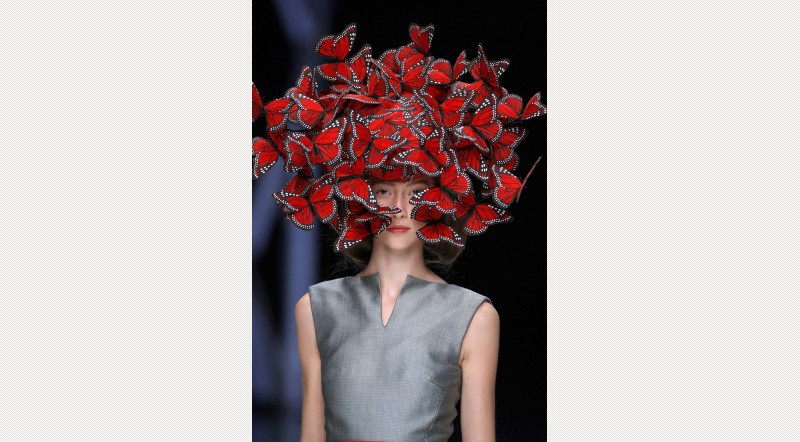
When the Metropolitan Museum of Art staged a retrospective of the late designer Alexander McQueen three years ago, no one could have quite anticipated the dizzying heights of its success. The show quickly became a phenomenon, driving 660,000 people through the door and notching up a place on the museum’s top 10 most visited exhibitions list – eighth in its 142-year history. Now an expanded version of the exhibition is being shown in McQueen’s hometown, featuring 30 additional garments and a new section exploring his early days as a designer.

Philip Treacy for Alexander McQueen Butterfly Head dress

Philip Treacy for Alexander McQueen Butterfly Head Dress


McQueen’s career went from strength to strength; among his most notable creations were David Bowie’s Union Jack coat and Bjork’s topless dress. His ‘bumsters’ sparked a new trend for low-rise jeans and his skull motif emblazoned designs were coveted among the fashion elite.

Aside from his commercial success, McQueen became known for staging outrageous catwalk shows. His most famous included a recreation of a shipwreck, a human game of chess and a life-sized hologram of Kate Moss, dressed in yards of rippling fabric. The latter is one of the exciting features of this V&A display.

The designer said of London ‘It’s where my heart is and where I get my inspiration’, making it particularly apt that the exhibition is staged in the city. At the announcement, V&A director Martin Roth commented: ‘It feels like we are bringing his work home’.

V&A (Victoria & Albert Museum)
Cromwell Road
London
SW7 2RL
020 7942 2000
www.vam.ac.uk

Open daily: 10am – 5.45pm
Fri: 10am – 10pm

Book online via the V&A website